
Mental health is more than a clinical diagnosis. It’s about where you live, what you do, and who’s...
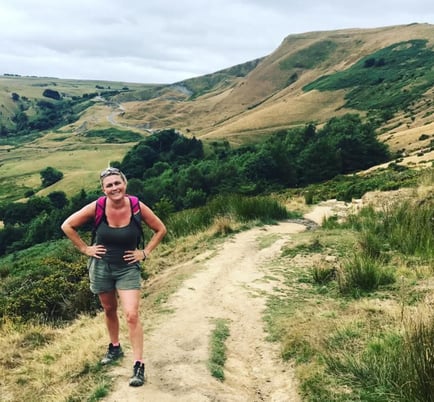
Esther Allison grew up in Cleethorpes and left school in 1995, “finding her way through a childhood where she experienced things no child should”. Now 46, she is a qualified teacher, a founder, and someone with a very clear understanding of what young people in North East Lincolnshire need, because she was once one of them.
A beginning that was not straightforward
Esther is careful about how much she shares, and that care itself tells you something about the kind of person she has become. But she is also honest, because honesty, she believes, is the whole point.
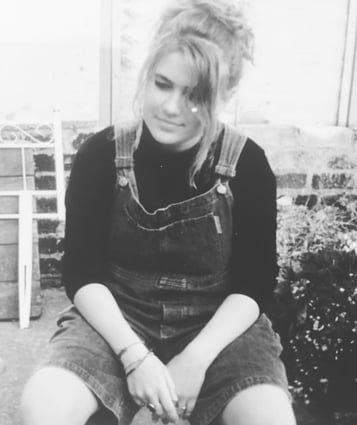
From a young age, Esther experienced multiple trauma. By the time she reached her teenage years, she had gone, in her own words, completely off the beaten track. She found herself in situations that young people need protection from. She found herself involved with drugs, in situations we would now name as child exploitation, and eventually placed in foster care at fifteen, all the way out in Epworth near Scunthorpe, far enough from home to feel like another world.
"She was fifteen, placed far from everything she knew, and she made the only decision that felt like hers to make. She left. For a period after that, she had nowhere to go."
When Esther talks about that time, she is not looking for sympathy. She is looking for understanding, and specifically she is trying to explain the one thing she wishes someone had helped her understand back then.
"It all stemmed from having no self-worth. I was not valuing myself. I was looking for affection in all the wrong places, looking to feel like I belong in all the wrong places."
She was not a bad young person. She was a young person in pain, whose actions were a reflection of how she felt inside. The difference between those two things is exactly what Life Skills Academy is built on.
The long road to teaching
Esther had always wanted to teach. But for a long time, she did not believe someone like her ever could.
After leaving school she went to college, then quit. In her early twenties she was working at an insurance brokers in town, not enjoying it, and carrying a feeling she could not shake. She was meant to do something else.
Her mum had just started a degree in her late forties. If her mum could do it, maybe she could too.
"Esther enrolled with the Open University and began a degree in humanities, covering history and religious studies. There were no campus days, no lecture halls, no student life. In the early years, the university sent cassette tapes to her home, and she would write out her assignments by hand, post them off, and wait for them to come back marked.
All of this while working during the day. Life did not pause to make it easier.
It took seven years to get her degree, stretched around everything else that life threw at her, but she finished it. She got there."
"I did not think someone like me would ever be a teacher. That was my brick wall."
A chance encounter at a careers fair changed everything. A woman was looking for people to go into schools on supply. Esther explained she was finishing her degree and not yet fully qualified. But they said it didn’t matter. She started and, fell in love with working in a secondary school, somewhere she had never expected to end up, and she trained on the job at Hereford – then Ormiston and Oasis Wintringham. She has never looked back.
She has been teaching PSHE and citizenship in a secondary school for years since. And it was through that work, the real conversations, the difficult topics, the young people who reminded her of herself, that the idea for something more began to take shape.
Life Skills Academy: what it is and what it does
Life Skills Academy – Education was founded just a couple of months ago. It is brand new, and it is already picking up interest.
The idea is straightforward. Esther has reduced her teaching hours and is now reaching beyond her own school to work with young people across a wider range of settings, including secondary schools, alternative learning provisions, youth clubs. She goes into those places, or she can work remotely. She is flexible about format: a one-off assembly, a single forty-five-minute session with a small group, or a series of two or three sessions delivered over consecutive weeks. If a parent is struggling and asks for something more personal, she will consider that too.
The sessions are focused on helping young people build confidence and self-worth, understand their own choices, and start to see the connection between how they are feeling and how they are behaving. Esther can also go into specific territory, including healthy relationships, drug use and misogyny, drawing not just on her professional expertise but on experience she has lived firsthand.
What makes her different, she says, is that she is a qualified teacher who works with young people every day. She understands how to reach them, how to get down to their level, how to hold a room when it is difficult.
"If I had had a little bit more understanding of why I was doing the things I was, it would have changed everything for me. I was dealing with feelings I did not understand. All my actions were a reflection of how I felt inside."
She is not naive about the scale of what she is taking on. She is not expecting to fix everything for everyone. But she wants the opportunity to try.
The feelings have not changed, but the world has
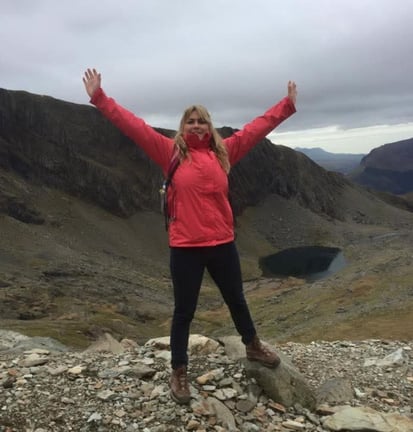
One of the most striking things Esther says in conversation is this: the feelings young people experience when they have been through trauma, when they do not value themselves, when they are putting themselves in dangerous situations, those feelings are exactly the same as they were when she left school in 1995. Human beings have not changed.
What has changed is the environment they are living in.
When Esther was growing up, at least there were moments behinds closed doors, to be able to briefly escape from the pressure to fit in, to be seen, to belong. Today's young people never quite get that. The pressure follows them into their bedrooms, onto their phones, through every notification and every scroll. Social media has added a layer of noise and comparison that sits on top of the same old feelings, and makes everything harder to sit with.
"I just want to try and separate young people from that whirlwind a little bit, and put the value back on who they actually are as individuals."
She is not dismissive of the other support that exists. She knows there are good organisations doing good work in this area. What she believes Life Skills Academy offers is a slightly different angle: someone who combines daily professional experience with the kind of lived understanding that no qualification can teach you.
Something she is building right now
There is one more thing Esther wants people to know about.
For many years, she has kept journals. Writing, she says, was one of the things that genuinely helped her through. She began compiling those journals into a book, originally aimed at adults dealing with trauma, and it was coming together well.
But she has had a change of heart. She has set the book aside for now and is turning that material into something else: a short, focused guide for young people aged fifteen to nineteen. Ten short chapters. Plain language. Each section ends with reflection questions and space for them to write and think. Something they can hold in their hands that is not a screen.
It is almost finished. And when it is, it will become a tool she can leave with the young people she works with, something concrete to take away from a session and return to in a quieter moment.
The book for adults will come. But right now, her focus is where it has always been: the young people who remind her of who she once was.
Why she reached out
Esther found Our Future North East Lincolnshire on LinkedIn, a platform she had only recently discovered, and was struck by what she saw: people across the region sharing what they were doing, collaborating, and lifting each other up.
She reached out because she recognised something. She is not doing this for recognition. She is doing it because she is 46 years old, she has done the work, and she finally feels ready.
"It comes from a really genuine place. I have never been at a place where I am now, to feel this confident, to say, I am actually going to do this. This is the right time."
If you know a school, a youth organisation, an alternative provision, or a young person who might benefit from what Esther offers, you can find out more about Life Skills Academy – Education and get in touch with her directly.
Do you have a story to share from across North East Lincolnshire?
We are always looking to hear from people, groups, organisations and businesses doing meaningful work in our community. Get in touch at jose@our-future.io