
When people leave their hometown, they often carry a piece of it with them wherever they go. For...
Bringing Grimsby's History to Life
Martin and Steve's Vision for a Living Museum. Two friends. One vision. A town's history brought back to life.
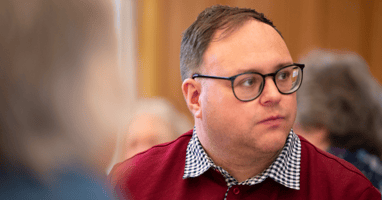
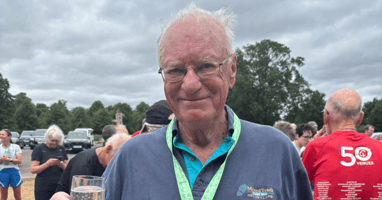
Martin Grant and Steve Drinkell have known each other since they were teenagers. They've lived through different decades, travelled different paths, and worked different jobs but they've always shared one thing: a deep love for Grimsby and its history.Now, after reconnecting over a pint in the pub, they're on a mission to create something truly special—a living museum in Grimsby town centre that celebrates the people, the stories, and the resilience of this place.
From Sea to Shore and Back Again
Martin comes from a fishing family. At 15, he went to sea and fished for 32 years. He also worked in the Merchant Navy, travelled the world, and lived in different places. But eventually, he came home.
"I tried to find people similar to me who started to think, you know, the place I come from is a really great place," Martin says. "I've been able to use the information I was taught from a child onwards on my way through the world and now I've come full circle back again."
That's when he bumped into Steve—an old friend he hadn't seen in 30 years.
"It was over a pint," Martin laughs. "The idea came up, and Steve said, 'Yeah, yeah, we can do that.' And it's just morphed along from there."
Steve's background is in fishing too along with building, construction, and all the hands-on skills that kept Grimsby's industries alive for generations. Between them, Martin and Steve carry decades of knowledge, stories, and lived experience.
And they realised: if they don't pass this on, it could be lost.
What Makes It a Living Museum?
A living museum isn't about looking at paintings on a wall or reading plaques in silence. It's about participation. It's about bringing history to life through real people, real skills, and real stories.
"We want families to come along and trace their histories," Martin explains. "They can see what their grandfathers and great-grandfathers did. It's about building participation everyone can get involved.
The vision is to create a space where people can learn traditional skills like rope-making, net-mending, woodwork, and navigation.
Where children can discover what life was like before electronics and social media. Where older generations can share their knowledge and younger generations can learn from it.
"It's not a one way thing," Martin says. "The children can educate us too."
Why Now?
Martin draws a parallel between the collapse of the fishing industry and the impact of COVID.
"After the Second World War, people had lost everything but they built themselves back up," he says. "We've been through COVID. People have lost family members. Everything's been taken away, virtually. So how do you start to rebuild?"
The answer, Martin believes, is to look back at how people managed in the past before all the modern conveniences. How they survived. How they worked together. How they found pride and purpose in what they did.
"We want to reinstall a sense of pride," Martin says. "Whatever you do, no matter how small, you should be proud that you've attempted it."
The Plan: Victoria Street and Beyond
Martin and Steve are in the process of opening a venue on Victoria Street in Grimsby town centre—and they're hoping to be open in 2026.
"Two reasons for Victoria Street," Martin explains. "One: footfall. Two: everyone knows Victoria Street but what they don't know is its history. How old it is. There's a lot more to it than people imagine."
The space will become a hub for storytelling, learning, and community connection. But this is just the beginning. Eventually, Martin and Steve hope to secure a larger building that can house a full living museum with workshops, exhibitions, and space for people to come together and share their skills.
It's Not Just About Fishing
While fishing is a huge part of Grimsby's story, the living museum will cover the full history of the area from before the Vikings right through to the present day.
"Grimsby before Grim," Martin says with a smile.
That includes the maritime industries, the docks, the people who built the town, the families who lived here, and the resilience that's kept this community going through decades of change.
Who's Getting Involved?
Martin and Steve have already brought together a passionate group of supporters, including Lia Nici, the former Conservative MP for Grimsby, Mark Hodson (a local architect whose family has deep roots in Grimsby's fishing past), Jonathan Goolden and Malcom Edwards from Wilkin Chapman Rollits Solicitors, Linda Mitchell, who is donating a wealth of historical photographs and information and Martyn Boyers CEO of Grimsby Fish Market.
They're also working with a graphic designer at Grimsby Institute to create welcoming branding, and they're in conversation with North East Lincolnshire Council, who understand the vision and are supportive.
Get Involved
Martin and Steve are at the start of something special but they can't do it alone.
They need people to get involved. To share ideas. To donate photographs, stories, or artefacts. To volunteer time or skills. To spread the word.
"We want to shout louder than the naysayers," Martin says. "The keyboard warriors on Facebook, all the negativity they seem to shout louder than we do. And I think that needs to change."
"The most important thing to Steve and myself is to reinstall a sense of pride. Pride in who we are. Pride in where we come from. Pride in what we've survived."
If you'd like to be part of the living museum whether that's offering ideas, volunteering, donating historical items, or just coming along to see what it's all about watch this space for progress on this project.
The team would love you to have your say please click on the link here to complete the survey