

For Marie, applying to become a Decision Maker was about being part of the positive change she is...
Grimsby has always been a town that knows what it means to get on with it.
People look out for their own, families stick close, and community can be felt in the everyday places where life happens.
The challenge, as Sara Morris sees it, is that we have not always had much practice at welcoming difference, simply because for a long time many people here did not encounter it.
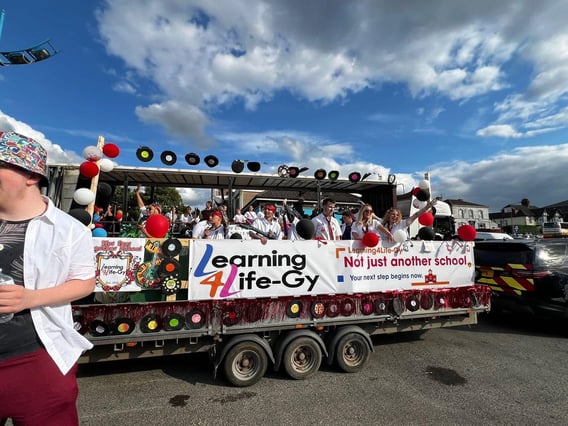
Sara is the CEO and founder of Learning 4 Life GY, based on Freeman Street, and her work sits right in the middle of that reality. It is practical education, yes, but it is also safety, belonging, confidence, and helping people find their feet when life has knocked them sideways.
This is a story about what Learning 4 Life does, who it is for, and why kindness in Grimsby matters, especially for people who have arrived here as refugees or asylum seekers, often carrying far more than a suitcase.
Why Sara started Learning 4 Life
Sara did not set out to “start an organisation”. She was working in education within the local authority and could see that community learning support was being reduced and poorly managed, with gaps opening up that would leave people behind. When inspectors and colleagues began asking what might be done differently, she and her business partner Claire made a decision to build what they felt was missing.
Learning 4 Life began in 2019, with a very specific group of young people: unaccompanied asylum-seeking children, roughly aged 14 to 17. They were arriving in the area from many different countries, and what they had lived through was not something that could be solved by placing them straight into a college classroom and hoping they would “catch up”.
Some had experienced exploitation, violence, loss, and trauma that most of us cannot imagine. Sara’s point was simple, and it still shapes the organisation today: education does not work in isolation when a person is overwhelmed, frightened, or trying to survive.
What Learning 4 Life is now
Over time, Learning 4 Life has grown beyond its original focus, but its core purpose has not changed. Sara describes the work as supporting individuals to have the best possible experience of life in our area, whether that involves education, employability, friendship, wellbeing, family learning, or simply not being alone.
Today, the organisation supports:
- Young people aged 14 to 19, including many with Education, Health and Care Plans, often linked to social, emotional and mental health needs, with a significant increase since the pandemic.
- Adults aged 19+, including people who are isolated, lacking confidence, rebuilding after years out of education, or trying to find a pathway into work and community life.
- Refugees and asylum seekers, some newly arrived, some who have been in the system for years, many desperate for clarity and stability while they wait for decisions that shape the rest of their lives.
Sara shared that they are currently supporting around 35 young people and over 120 adults. Behind those numbers are real lives: parents trying to help children settle into school when they cannot speak English, people with professional skills from home countries who need support translating that experience into the UK system, and individuals who simply need a place where they are treated with dignity.
“Wraparound support” in real terms
We often hear phrases like “wraparound support”, but Sara made it feel very real.
At Learning 4 Life, support does not look like a class that runs for a few hours and then sends people away until next week. People can come through the doors throughout the working week, and the support flexes around what they need. That might be learning, but it might also be:
- help navigating paperwork and processes
- access to computers and digital support
- wellbeing sessions to reduce isolation
- sports and activities, including women-only spaces when privacy is important
- connecting people with other services, rather than trying to do everything in-house
Sara described herself as a partnership worker. Learning 4 Life brings people together, then works with whichever organisations are best placed to help, whether that is careers support, local services, community organisations, or specialist teams. The point is not to “hold” people forever, but to help them build stability and move forward.
Why language support matters more than people realise
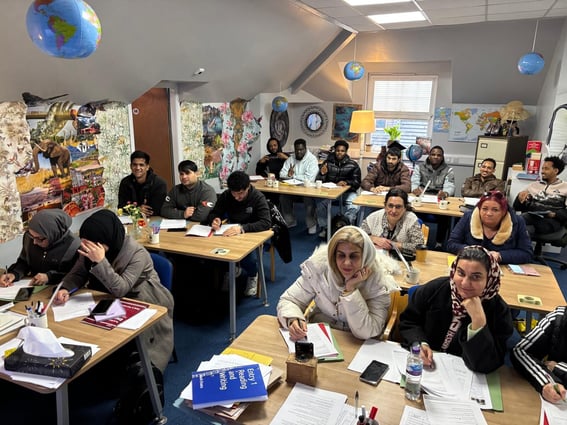
One of the clearest things Sara spoke about was what happens when a child arrives in a school with little or no English. It is easy for people to assume a child will pick it up quickly, but without proper support, many cannot. And the challenge is not only in the classroom.
If parents are not English speakers either, that child may go home to a loving family who still cannot help with homework, letters, or the day-to-day complexities of school life. It becomes a double burden: learning a new language while also trying to bridge the gap for the whole family.
This is why schools refer parents to Learning 4 Life too, and why the work is not simply “English lessons”. It is confidence, connection, and making sure families are not left trying to cope alone.
A place of welcome, not suspicion
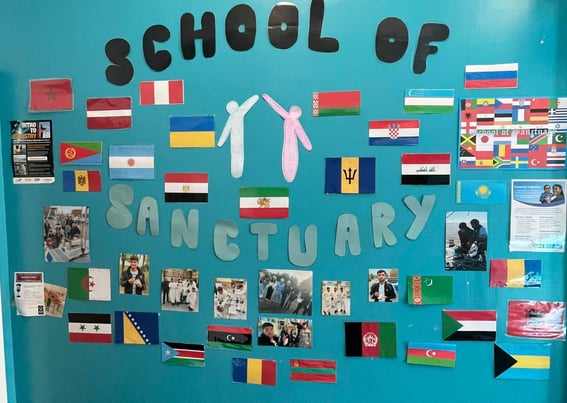
Sara was honest about something many organisations will not say out loud. Because of ignorance and hostility around migration, Learning 4 Life has often felt it needed to keep its head down. Not because they are doing anything wrong, but because in some corners, simply supporting refugees can attract judgement or misinformation.
That is why gaining School of Sanctuary status mattered so much to Sara. It took 18 months of work, and it is not a badge you claim lightly. For Sara, it is proof that the organisation is what it says it is: a place that welcomes people properly, and holds itself to a high standard in how it supports those who are vulnerable.
What happens when people meet each other
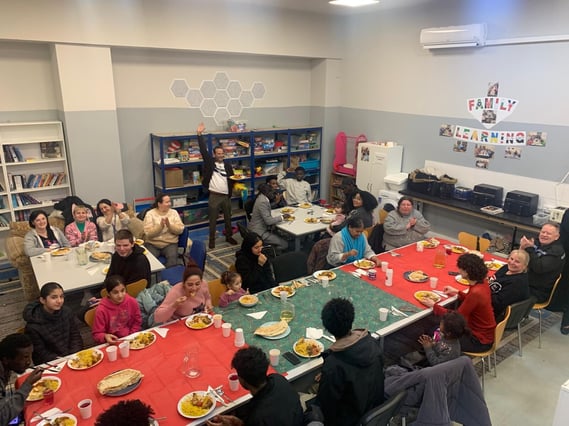
One of the most hopeful parts of the interview was the way Learning 4 Life creates opportunities for people to actually meet, rather than only hearing about each other through rumours, headlines, or social media.
Every Tuesday evening, Learning 4 Life hosts family learning sessions, often with 40 or 50 people, where families bring food from different countries, share meals, and build relationships. They also invite guests from local services and organisations, not as a performance, but as a practical bridge: police, local schools, charities, churches, and others who can help families understand how things work here, and who can understand the reality of the people they are serving.
Sara also spoke about supporting women through a co-operative approach, helping them gain food hygiene qualifications, build confidence, and develop skills that could lead towards work. They have created cookery books, taken part in events, and even given food out at the Freeman Street market to encourage conversation and connection with the wider public.
This is integration in its most grounded form. Not forcing anyone to become somebody else, but creating shared space, shared respect, and the simple experience of being human together.
Grimsby, fear, and the stories we tell ourselves
Sara described the biggest challenge many learners arrive with as fear.
Some of that fear is personal and immediate: fear about family left behind, fear of decisions they cannot control, fear of being moved on at short notice, fear of not being safe. But Sara also spoke about fear as something wider, something that spreads through communities when people do not understand what is happening and feel as if change is being “done to them”.
Grimsby is not alone in this, but it can feel sharper here because we are not historically a place that has always seen multicultural life up close. If your world has been mainly local, and you have not travelled much, it is easy to feel that newcomers are a threat, especially when the loudest voices frame migration as danger.
Sara’s view was that kindness and common sense can still win, but only if we choose to think for ourselves and stay curious, rather than letting fear do the thinking.
Migration is not new, and it has never been simple
One of the most important things Sara said, gently but firmly, is that migration is not a modern invention. People have moved across countries for centuries, for work, for safety, for love, for survival, and for opportunity. The reasons change, the politics change, the language changes, but the human story does not.
If you look across British history, you will find wave after wave of people arriving and settling, often facing suspicion at first, and then, over time, becoming part of the fabric of the country: families building businesses, working in essential industries, raising children, serving communities, and contributing far more than is ever captured in a headline.
What changes the story is not whether people move. What changes the story is whether we choose to meet people as neighbours, or keep them at a distance as a problem.
A simple truth: people are not here for an easy life
Another myth Sara sees regularly is that people seeking refuge do not want to work, or that they are here for “handouts”. Her experience is the opposite. Many are desperate for a stable status so they can plan, contribute, and build a life. Some have been here for years, caring for families, living quietly, and simply needing confidence and support to step forward.
Sara also made a practical point that is worth holding onto: even if someone’s asylum claim is refused, the skills they learn are still skills. Education, language, confidence, and understanding how to navigate life safely are never wasted. They travel with a person, wherever they end up.
The work that most people never see
Sara spoke about the people you never hear about, the ones who do not come forward until crisis hits: someone who has been isolated for months, whose mental health has deteriorated, who ends up presenting through emergency or mental health services because they feel there is no other way out.
It is why Learning 4 Life works closely with partners and is always trying to connect with other organisations, including learning from places with longer experience in refugee support. The need is growing, and Grimsby is still developing the network of support that many larger cities already have.
Looking ahead: learning side-by-side, as one community
When Sara talked about the future, her ambition was clear. She wants more integrated learning, where local residents and people from migrant communities learn alongside each other.
Not as a political statement, and not as a forced version of “integration”, but because learning puts us all on a level. People show up because they want to improve something, because they are trying, because they are building. That shared vulnerability can dissolve myths faster than any argument ever will.
Sara also wants Freeman Street to be seen as part of a culture shift: not a place people talk down, but a place where community life is being rebuilt in real time. Her phrase stayed with me: it might look run down in places, but the people are not run down.
A gentle ask of Grimsby
If you have read this and felt unsure, or even defensive, that is alright. Change can feel uncomfortable. But the invitation here is not to agree with every policy, or pretend that complex systems are simple.
The invitation is smaller, and more human.
To remember that refugees are people first. To notice the courage it takes to start again in a town where you do not know the language, the customs, or the systems. To accept that fear grows in the dark, but kindness grows when we are willing to look someone in the eye and see a person.
Learning 4 Life is doing the quiet work of helping people belong, learn, and rebuild. Grimsby can do its part too, simply by choosing to be less afraid, more curious, and a little kinder than we have been taught to be.
If you would like to learn more about Learning 4 Life, support their work, or get involved in a practical way, keep an eye out for their open days and community activities on Freeman Street, and consider how you might be part of the welcome.
You can find more information here https://learning4life-gy.co.uk/