
Mary Vickers: Chaplain, Food Justice Advocate, and Champion for Community Resilience
How Ann-Marie Matson and her team are changing the experience for children and young people in North East Lincolnshire
Just over two years ago, when Ann-Marie Matson stepped into her role as Director of Children’s Services at North East Lincolnshire Council, she did so with clear eyes and no illusions.
Children’s outcomes in our borough had not been where anyone would want them to be. The challenges were well known. The scrutiny was real. Expectations were high.
But what Ann-Marie observed was not just a children’s services in need of improvement. She saw an opportunity to reset the strategic landscape for children and young people across the whole community and partnership. To create lifelong change. To shift the story from one of inadequacy to one of ambition, belonging and hope.
Her role is wide and weighty. It spans children who need extra help and protection, children who come into care, young people leaving care, and the partnerships that shape children’s daily lives across schools and colleges. It means working side by side with education settings, health and police partners and the community and families to ensure every child in North East Lincolnshire has the opportunity to thrive, succeed and feel that they belong.
It also means confronting uncomfortable truths about where we have fallen short, and having the courage to do something different.
Bringing Children Home
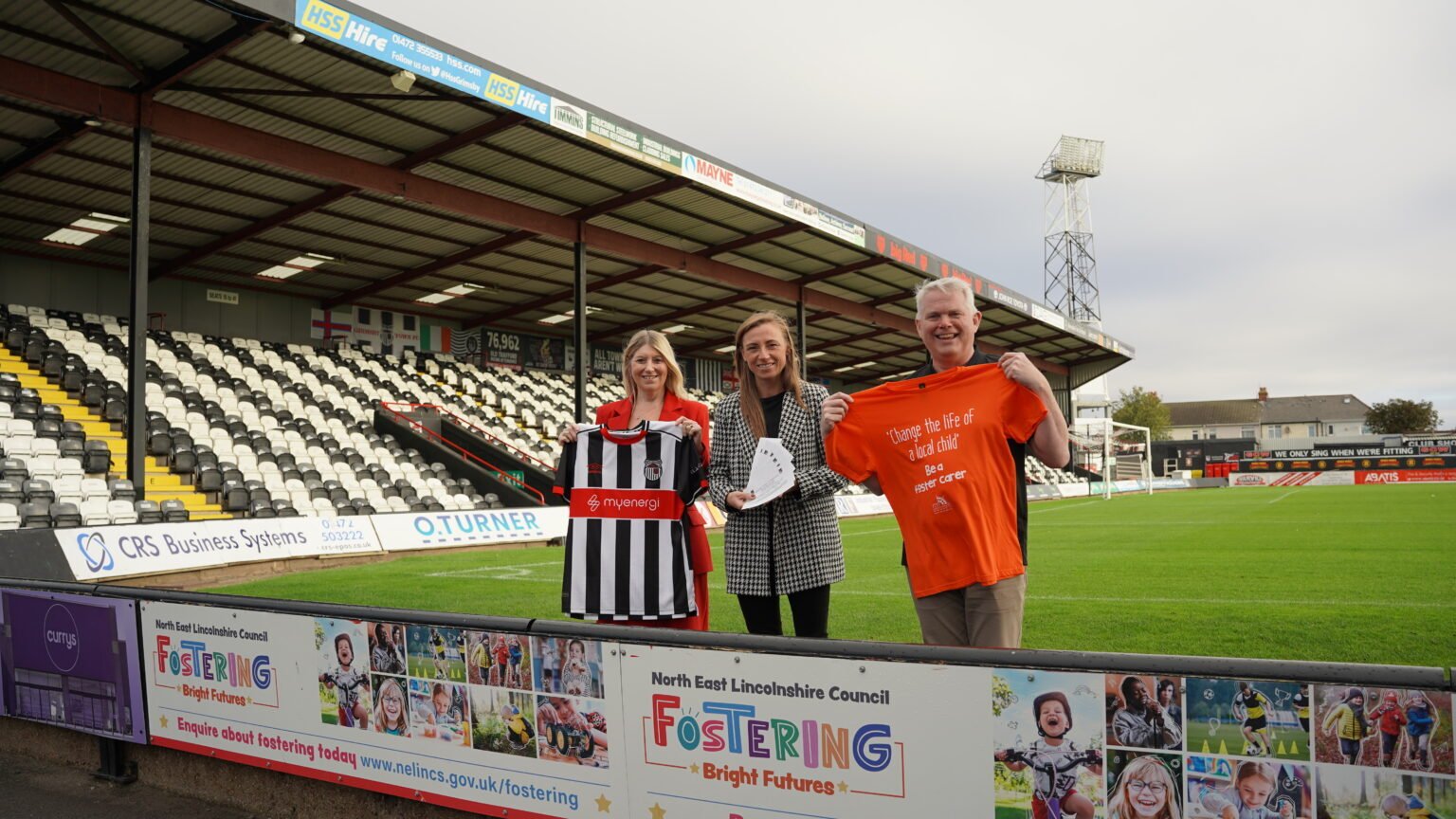
One of the most visible examples of that different approach has been the Fostering Friendly Borough campaign.
When Ann-Marie reviewed the landscape for children in our care, one fact stood out starkly. Too many children were being moved out of the area. Some were placed hundreds of miles away from their home town. Not because that was best for them, but because there were not enough local foster carers to provide stable, loving homes.
Children were therefore experiencing disruption of their school setting, their friendships and their community ties.
That had to change.
The campaign began with a simple but bold idea: this could not be solved by one organisation alone. The whole borough needed to step forward.
An early conversation with Jason Stockwood proved pivotal. What started as a request for access to match-day footfall quickly became something much bigger. With the support of Grimsby Town Football Club, the campaign launched publicly, but it did not stop there.
Today, nearly 200 local businesses have signed up as fostering friendly organisations. Some have changed HR policies to make it easier for employees to become foster carers. Others offer practical support and discounts to fostering households. Schools have joined. Community organisations have joined.
Most importantly, foster carers feel recognised and valued. They are volunteers, not profit makers. They open their homes and their hearts because they believe children deserve love and stability. And for the first time in many years, North East Lincolnshire is recruiting and assessing more foster carers than it has in over a decade.
There is still work to do. The need remains significant. But more children entering our care now are far more likely to stay local, remain in their schools and keep their friendships. That shift alone is life changing.
Ending Profit from Children’s Pain
Another powerful chapter in this turnaround began at a retreat through Our Future in Cambridge, where Ann-Marie found herself in conversation with Simon Beeton of NAViGO.
The question was simple but radical. What if there was a not-for-profit children’s home in North East Lincolnshire? What if local children placed far from home could be brought back? What if care was rooted in community rather than commercial gain?
From that question grew the “Bring Our Children Home” campaign and, after two years of determined work, a 5-bedroom children’s home has opened its doors. A maximum of three children will live there at any one time, ensuring space, safety and high quality care. Bedrooms will be personalised. There are shared family spaces and quiet breakout areas. It is, in every sense, a home.
Not-for-profit children’s homes are minimal nationally. To have one here, created through local partnership, is significant. For the children who will move in, it means returning to their community. For the borough, it means taking a stand on what kind of care we believe in.
Listening to “Our Voice”
If there is one story that captures the heart of this turnaround, it is not about policy or buildings. It is about a 15-year-old girl.
Shortly after taking up post, Ann-Marie met with a group of children in care known as “Our Voice Listen Up”. She arrived ready to introduce herself and share her vision. Instead, she encountered anger, sadness and deep frustration. The children’s experiences had left scars. Trust was fragile.
One young person shared her story. It was not what any of us would want to hear for a child in our community.
Rather than offering platitudes, Ann-Marie invited her to work alongside her on the improvement journey. They have met monthly for over two years. The young person, now 17, arrives with her own agenda and action list. She has spoken to senior leaders, challenged practice, represented children in wider partnerships and even stood in the House of Lords to share her experience.
Approximately five months ago, at one of their regular meetings, something shifted.
Instead of presenting a list of concerns, she said quietly, “We don’t need to do that anymore. Everything’s okay. You’ve doing everything we’ve asked for us.”
For Ann-Marie, that moment mattered more than any inspection judgement or performance report. It was lived evidence that change was not theoretical. It was felt.
Challenging the Narrative
There is still a wider conversation to have in our town.
Too often, we hear language that reduces young people to labels. Words like “delinquents” or worse. Groups of teenagers in the town centre are dismissed as trouble before anyone asks what might be behind the behaviour.
Ann-Marie is clear that children are children. Boredom, lack of opportunity, limited safe spaces and complex home circumstances all shape behaviour. None of that excuses harmful actions, but it does demand understanding and response rather than condemnation.
The opening of Horizon Youth Zone, supported by multimillion pound investment, is one example of that response. It offers a safe, vibrant space for young people after school and at weekends. But it is part of something broader.
Nationally, the Government’s Youth Strategy is refocusing attention on youth provision. Locally, the council is working with almost 100 organisations to map and strengthen the offer for young people across the borough. There are ambitions to become a more playful place, re-centring play and fun in public spaces, removing unnecessary barriers and creating an environment where children feel visible and valued.
Alongside this, work with the Centre for Young Lives through the Growing Up Well project is placing wellbeing at the heart of strategy. Early help. Early indicators. Early belief.
.jpg?width=4000&height=2250&name=DJI_0146%20(2).jpg)
A Borough of Belonging
The turnaround in Children’s Services is not about one individual. It is about a team that is clearly deeply committed, and about partnerships across the borough stepping forward. But leadership matters, and Ann-Marie’s combination of courage, humour and relentless optimism has helped reset both culture and expectation.
Progress has been made. Practice is more consistent. More children are helped and protected in ways that are different from before. But there is honesty in acknowledging that not every child is yet where we want them to be.
The ambition for 2026 and beyond is clear. To create a borough of belonging. To hold the highest aspirations for every child, regardless of their starting point. To ensure that no child’s past defines their future. To replace judgement with understanding, and indifference with action.
Children in North East Lincolnshire are not a problem to be managed. They are our future leaders, business owners, parents and community builders. They are already shaping this place in ways we may not yet fully see.
The turnaround in Children’s Services is a reminder that when we listen, partner and act with courage, change is possible.
And that every child, without exception, deserves love, stability and the chance to thrive right here at home.