


When people leave their hometown, they often carry a piece of it with them wherever they go. For...
Walk onto Grimsby Fish Docks and you feel it straight away. The working rhythm of the place. The history in the brickwork. The quiet confidence of people getting on with their jobs, feeding the country, doing it properly.
Patrick Salmon is one of those people.
Patrick runs Alfred Enderby, a traditional smoked fish business on Grimsby Docks, and when you sit down with him you quickly realise this is not just a job or a brand. It is a lifetime of connection, family heritage, and an almost stubborn commitment to quality and place.
He talks with real warmth about Grimsby. Not in a rose-tinted way, but in the way someone speaks when they have watched a town change, felt the weight of its reputation, and still believes, completely, that the best story has not been told properly yet.
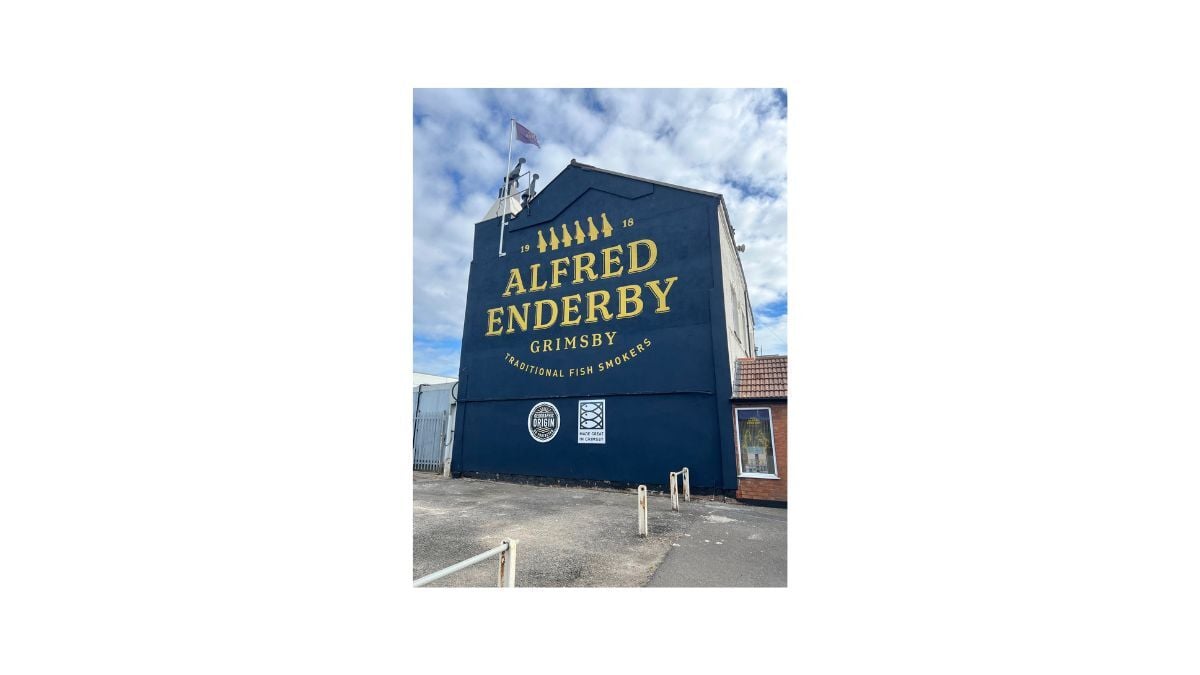
A Grimsby life, rooted in the docks
Patrick was born in Grimsby and his family’s ties to the fishing industry go back generations. On his mother’s side there were longstanding links to fish smoking, and on his father’s side there is the memory of a man who went out on the trawlers after serving in the Navy.
It is part of the fabric of his life. It is also part of the reason he speaks so passionately about what Grimsby still is, even if the headlines have tried to convince people otherwise.
Because while the trawler fleet is no longer landing fish here in the way it once did, Patrick is clear that the industry did not disappear. It evolved.
His point is simple, and it matters: Grimsby is still one of the most important fish processing centres in the country, supplying a huge proportion of the fish eaten across the UK. This is not nostalgia. This is a living, working, modern industry, and it continues to provide jobs, skills and pride.
And yet, as Patrick says, locally we can sometimes take it for granted.
The protected name we should all know about
One of the things Patrick returns to again and again is how more consumers could value and understand more about traditional fish smoking.
Alfred Enderby is well-known beyond the area, with customers across the country who actively seek out Grimsby smoked fish because they understand what it represents. But Patrick wants to raise the awareness of the product to people locally who maybe do not always realise what we have on our doorstep.
Grimsby Traditional Smoked Fish.
Patrick believes the product is something that is rare and meaningful, so why not talk about it more?
We are on a mission to make Grimsby relevant, understood and raise its profile as a famous food place like other food places in other parts of the country.
Why shouldn’t consumers know more about our specially recognised protected product that represents craft, tradition and quality?
For Patrick, this is not just about recognition. It is about ambition. It is about making sure we keep producing the best possible smoked fish, protecting the integrity of the process, and being proud enough to say, clearly, that it comes from here.
“We do ourselves down”
Regarding the town itself, Patrick feels there being a sense that Grimsby’s reputation has been shaped too often by people who do not understand the place, and reinforced at times by negativity closer to home.
He is realistic about the fact every town has challenges and areas that struggle. But he also has a sense that some coverage of Grimsby in the past has been unfair, lazy, and obsessed with decline.
Patrick has spoken to plenty of journalists over the years, and he has learned to take interviews as an opportunity to put the record straight. He will talk to most people, especially if it is live, because he believes the story needs to be told in full.
What he wants people to understand is that Grimsby is not a single narrative. It is not just the docks. It is not just one street, one photograph, one headline.
It is a place with industry, coastline, countryside, architecture, engineering, energy, food, and an enormous amount of quiet graft.
And he makes an important point that landed with me: sometimes it is not “them out there” who talk Grimsby down. Sometimes it is us.
Made Great in Grimsby: a badge worth wearing
Patrick is a strong advocate for Made Great in Grimsby, a simple but powerful movement that helps tell the story of Grimsby’s powerful seafood processing cluster, a cluster that has a worldwide reputation and in Patrick’s opinion deserves far more attention.
The logo, which is now a brand, was created by the Grimsby Fish Merchants Association, and Patrick sits on the board. The intention was straightforward: to give people absolute clarity about where a product is made, and to help build pride in local production.
Patrick describes it as a kind of badge of honour for the 5,500 people who work daily in the industry feeding the nation with healthy, sustainable and nutritious seafood products which by the way, should be eaten twice per week according to NHS guidelines.
If you make something well, in the place you live, then that is something to stand behind. It says: we are here, we are skilled, we care about quality, and we contribute to the local economy.
He also makes it practical, not abstract. Patrick points to something most shoppers have seen but few understand: the factory code printed on food packaging on the supermarket shelves. It appears in an oval shaper logo on all packaging, if it’s made in Grimsby it will read as GB GG[factory number], which means Great Britain Great Grimsby.
His message is simple: if you live here and you are buying fish products, look for the ones made in Grimsby. Support the workers and businesses that keep the local economy moving.
It is such a small action, but when enough people do it, it becomes a culture shift.
Made Great in Grimsby is not just for fish, either. Patrick would love to see it adopted more widely by manufacturers, makers and producers across the town. A shared badge that quietly builds a stronger sense of identity.
If you have not seen it before, you can learn more here: Made Great in Grimsby: https://www.madegreatingrimsby.co.uk/
Pride, self-belief, and future generations
One of my favourite moments in the conversation was when Patrick told me about hosting a Made Great in Grimsby school visit that very morning. A group of teenagers, GCSE age, visiting the smokehouse, seeing how things are made, learning what quality looks like in practice.
There are plenty of career opportunities in seafood with well paid jobs in Grimsby and Made Great in Grimsby are very active with regional schools.
Patrick’s advice to them was not grand or polished. It was honest.
Work hard now, because this stage of life is shorter than you think. Believe in yourself, because self-belief shapes outcomes. If you decide you will fail, you probably will. If you believe you can do well, you give yourself a chance.
For Patrick, this links directly back to Made Great in Grimsby who as well as promoting careers in schools they promote careers with unemployed people too. The words matter.
It’s important that you don’t grow up surrounded by messages that tell you your town is failing, it is hard not to internalise that. But if you grow up seeing the words “made great” attached to the place you live, it can subtly shift something.
It can become a reminder that good things are made here, and that you can be part of making them.
Patrick also points to other places that have turned a corner through cultural momentum and pride. It only takes one meaningful shift, one shared story people start to believe in, for confidence to grow.
And confidence is contagious.